Generosity to Confront Hate
Generosity to Confront Hate
| Festival | Manifesto |
We have never been a united society. Economic inequality (and unequal access to goods, services, and opportunities for development), as well as discrimination based on skin color or social class, has always existed beneath the false illusion that we are one people or one nation.
But something new has been added to that historical reality in recent years: the political use of hate. Social leaders discovered that the resentment accumulated through inequality produced dividends. Moreover, to conceal their own shortcomings, they had no hesitation in discrediting any notion of objectivity: experts, leaders, and even social workers who had dedicated their lives to helping others were dismissed as having hidden motives or merely seeking to preserve their privileges.
Us and them. The situation has reached a point where it is destroying any possibility of coexistence.
We do not claim to be able to explain (or even fully understand) how we arrived at this point, but one thing is certain: the defining mark of our time is distrust of others.
Can we retrace this path that leads only to the destruction of society?
We believe we can, and we have said so since we began this effort: All social barriers (and fears) are broken when we discover ourselves to be the recipients of another person's generosity.
When we share what we have, what we do, what we know, or who we are; when we help someone simply because they need it, we are breaking with the market-driven logic of our environment.
This is not a moral argument. Today, it is a matter of survival.
Because those generous acts do something more: they help heal the social wound of others, but also our own. Together, we recover our humanity.
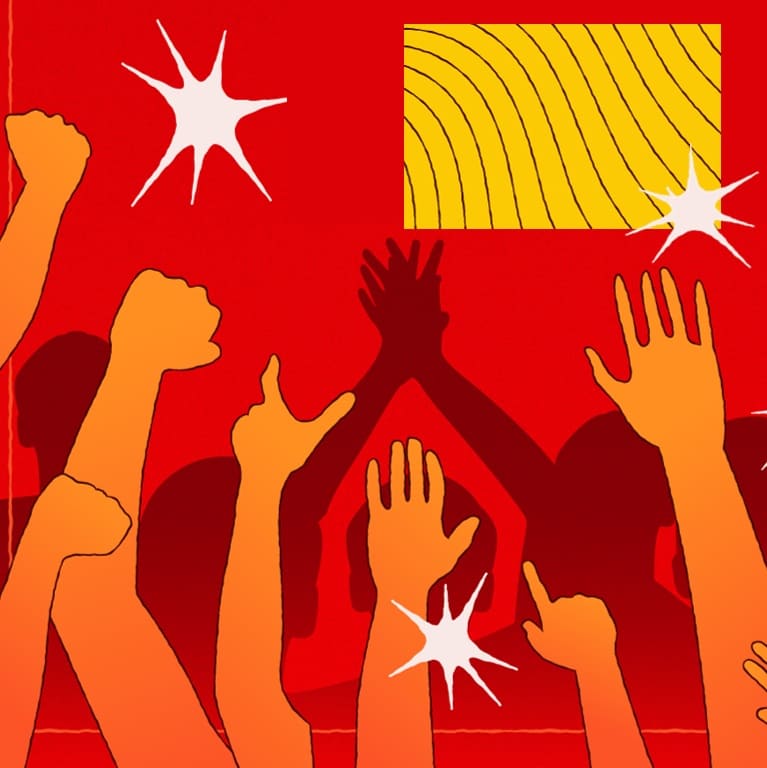
That is the revolution we believe in.
This time, the manifesto takes a different form: phrases or statements, each expressing the principles we believe in and that support what we do. For that reason, and in an effort to explain each one a little further, we have decided to publish it in parts, with one article dedicated to each statement.